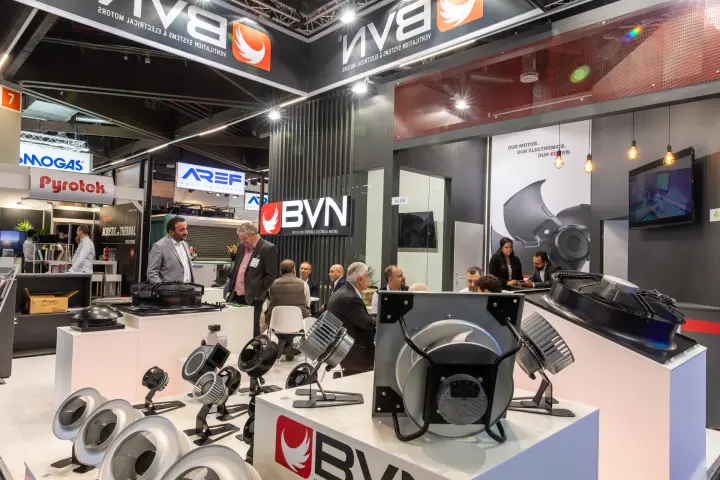

Websites, online shops and B2B systems for manufacturers
A technical catalog deserves more than a brochure site.
Technical websites that work like product platforms — with search, engineering data, documentation, ordering and B2B access built in.
From a product site to a full B2B platform
We have been building websites since 2001 and selection software since long before CloudAir existed — which is why these six things sit in one system rather than in four. Most projects start as one of them and grow into several.
Product websites
A deep category tree, technical data on every product, documents, drawings and photography — built for a range of thousands rather than a landing page with a contact form.
Parametric and duty-point search
Visitors filter on real technical variables, or enter an airflow and a pressure and get a genuine shortlist answered by the selection engine.
Online shops
A catalog that converts into an order, with prices, availability and delivery shown to the accounts entitled to see them — one system, not a shop bolted onto a website.
B2B portals and client panels
Per-partner assortment and pricing, order history, quotes, saved projects, stock, documentation and a data feed or API for the distributor’s own system.
Documentation centres
Manuals, declarations, certificates, CAD files and DXF outlines organised by product family and kept versioned, so an old datasheet never goes out by mistake.
Integrations
ERP, CRM, stock, pricing, the selection program and partner systems — connected through APIs rather than exports somebody has to remember to run.
Driven by the product database, or managed in the site
There is no single right answer here, and we build both. What matters is how often your technical data changes and how many channels have to agree with it.
Driven by the product database
One source of truth for every product channel.
The website reads product records, technical parameters, performance curves, dimensions, accessories, images and documents directly from the same structured database the selection software uses. Change a product once and every connected channel can use the new information immediately.
How it works
Best for
- Large technical product ranges
- Product data that changes often
- Several languages
- Manufacturers who already run selection software
- Dynamically generated catalogs and datasheets
- Distributors or external systems consuming your data
- Channels that must always show identical figures
Main advantages
Trade-off
It needs structured product data and a properly designed database, so the first implementation is the larger one.Worth it when product data is part of your digital infrastructure, not a by-product of it.
Managed in the website
A simpler site with independent content management.
Pages, product descriptions, photography, documents and marketing content are edited directly in the website itself. The engineering depth stays in a separate selection program the site links to, so the website never waits on anyone’s data release.
How it works
Selection softwareruns alongside as a separate engineering application, linked from the site.
Best for
- Smaller or more stable catalogs
- Few technical changes between launches
- Websites led by marketing content
- No need to synchronise every parameter across systems
- An existing selection program that can stay separate
- A smaller initial budget
Main advantages
Trade-off
Product information may live in more than one place, so keeping the website, the PDFs and the selector in agreement takes discipline.The right choice when flexibility matters more than full synchronisation.
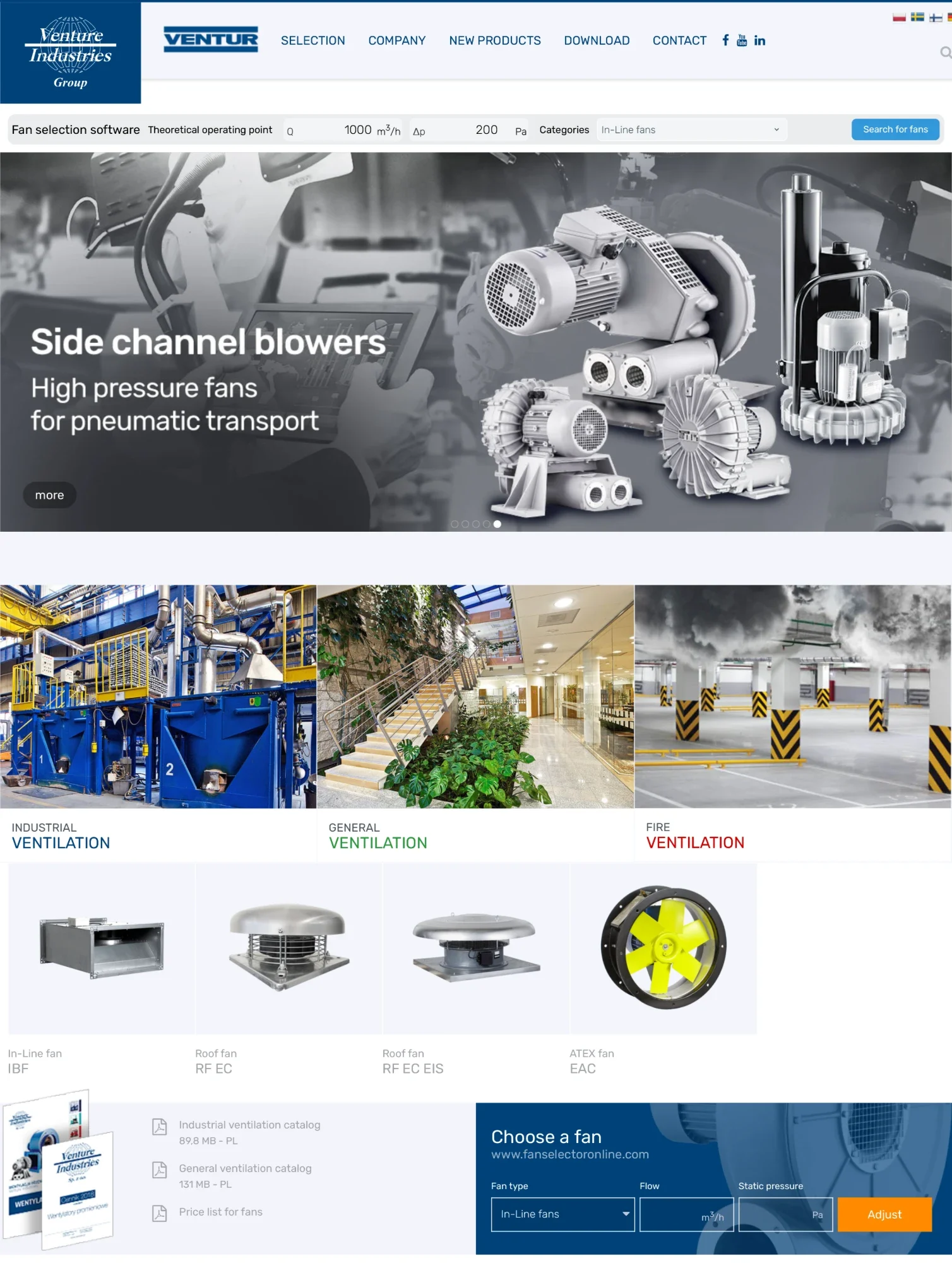
venture.pl — a website that is the catalog
Why this model: one database → website + selector + PDFs
Venture Industries sells thousands of products across a dozen fan categories in several languages. Their website does not describe that range — it renders it, from the one database that also feeds the selection program and the generated PDF catalogs.
- A duty-point search bar on every category page
- Filters on real technical variables, not on tags
- The same performance curves the selection engine computes on
- Dimensions, accessories and the product’s whole document library
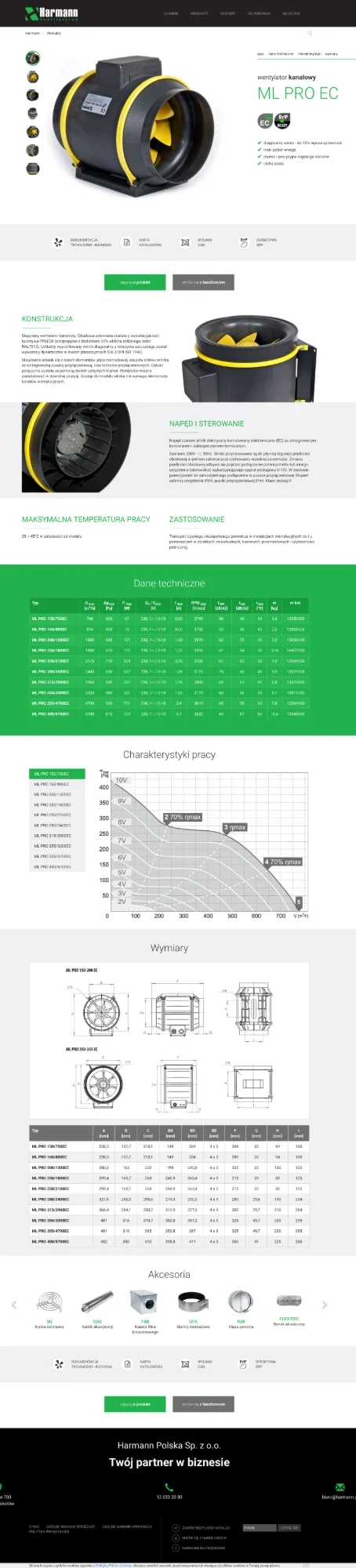
harmann.pl — presentation first, engineering next door
Why this model: marketing-managed site + separate engineering selector
Harmann needed a product site that presents a wide ventilation range clearly and sends serious enquiries into their selection program. Content is managed in the website itself, so the marketing team moves at its own pace.
- The whole range mapped onto one product page
- A systems section for complete solutions, not single products
- A documentation centre grouped by product family
- The selectair selection program promoted from the home page
The parts nobody asks for until they are missing
Global-ready
A new market is a new language version of the same site, not a second website to keep in step.
- Multilingual interface
- Translated product content
- Right-to-left layouts
- Per-market documents
Search-ready
A product site earns its traffic from thousands of technical pages, so the fundamentals have to be right from day one.
- Technical SEO
- Structured data
- Core Web Vitals
- Clean URLs & sitemaps
Production-ready
We host it, watch it and keep developing it. Launch day is the start of the work, not the end.
- Cloud hosting
- Daily backups
- Cookie consent & GDPR
- Analytics you can read
- Ongoing development
Built on the same platform as our PIM, selection software and product data API.
Common questions about product websites
Do we have to move our product data into your system first?
No. A website can be built either way. If your products already live in a structured database we read them from it, and the site stays current on its own. If they do not, the site manages its own content and we can connect it to a product database later without rebuilding the front end.
Can the website run a real product selection, not just filters?
Yes. A duty point entered on the website can be answered by the same selection engine that powers the selection program, so a visitor gets a genuine shortlist rather than a tag-based filter. Venture Industries runs exactly that on every category page.
What can a B2B portal do for our distributors?
Accounts with their own prices and assortment, order history, quotes, saved projects, downloadable documentation, stock visibility and a data feed or API for their own system. Each partner sees their own slice of the catalog and nothing else.
Do you handle the shop as well as the catalog?
Yes. A catalog that converts into an order is one system, not two: the same product records carry the technical data a designer needs and the commercial data a buyer needs, with prices and availability shown only to the accounts entitled to see them.
How many languages can the site run in?
As many as your content supports. Interface, product content and documents are each translatable, right-to-left layouts included, and a new market is a new language version of the same site rather than a second website to maintain.
Who hosts and maintains it afterwards?
We do, on our own cloud platform, with daily backups and monitoring — and we keep developing the site afterwards. Launch is the start of the work, not the end of it.

Let's talk about your website
Whether it should read your product database or manage its own content is the first question worth answering. Twenty minutes is usually enough to settle it.